


 Industry News
How Does Blade Runout Affect TCT Circular Saw Blades for Wood
One Source for Every Cutting Blade Need
A circular saw blade doesn't work in isolation from the machine around it. Its behavior depends on how it's installed, how the spindle supports it, how the flanges hold it in place, and how the whole assembly behaves once the machine actually starts moving.
This relationship becomes especially important when working with a TCT Circular Saw Blade for Wood in a busy shop. The blade needs to rotate around its intended center while staying securely supported by the machine throughout the cut. If the blade drifts away from this path, even slightly, the effect can show up through vibration, noise, blade movement, and changes in the way the cutting system behaves overall.
Blade runout is therefore not simply a blade problem sitting isolated on its own. It can come from the blade itself, the spindle, the flanges, the mounting surfaces, or the way the components got assembled together in the first place.
For TCT Saw Blade Manufacturers, understanding these relationships can help connect blade construction with the mechanical conditions found on woodworking equipment out in the field.
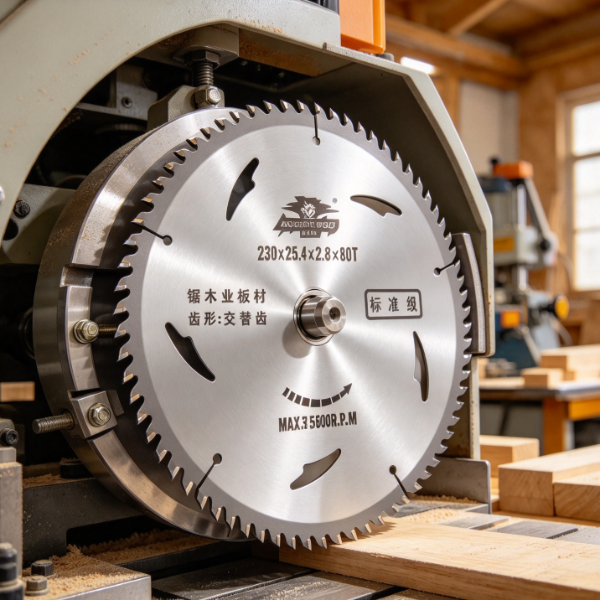
What Does Blade Runout Mean in a Circular Saw?
Blade runout refers to unwanted movement of the blade away from its intended rotational path during operation. Instead of rotating in a stable plane, part of the blade may move from side to side as the spindle turns beneath it.
A small amount of movement may not always be easy to notice when the machine sits stopped and quiet. Once the spindle begins rotating, however, the movement can become genuinely more visible through vibration or changes in the sound of the machine running.
Runout can be influenced by several parts of the cutting system working together.
| Possible Source | How It Can Affect Blade Movement |
|---|---|
| Blade mounting | May influence how evenly the blade sits |
| Spindle | Can affect the rotational path |
| Flanges | Help support the blade during rotation |
| Mounting surfaces | May prevent even contact |
| Assembly condition | Can influence overall stability |
| Operating condition | May reveal movement that is difficult to see when stopped |
This makes runout something that needs consideration across the entire blade assembly, rather than through the blade alone sitting in isolation.
Why Does Blade Installation Matter So Much?
Installing a circular saw blade may appear to be a genuinely simple mechanical task at first glance. The blade gets placed onto the spindle, the supporting components get fitted, and the assembly gets secured in place.
The actual condition of the mounting surfaces matters quite a bit here, though. If the blade doesn't sit evenly against its support, the assembly may begin rotating with an unwanted offset that shows up during the cut.
The blade should get installed according to the machine and blade manufacturer's instructions rather than by habit alone. Before assembly, the relevant contact areas should also stay clean and free from material that could interfere with proper seating.
A practical installation check can start by inspecting the blade mounting area, then checking the spindle and supporting surfaces underneath. Making sure the blade sits properly against its support comes next, followed by confirming the flanges are positioned correctly around it.
Securing the assembly according to the equipment instructions rounds out the process, with a final check of the assembly before normal operation begins. A careful installation routine can prevent a mechanical issue from getting mistaken for a blade defect down the line.
How Can Spindle Condition Influence Blade Runout?
The spindle is the rotating part that carries the blade assembly throughout every cut. Because the blade follows the spindle's movement directly, spindle condition has a genuine relationship with rotational stability overall.
A spindle that's worn, damaged, contaminated, or not properly maintained may not support the blade in the intended way it was designed for. This can create a situation where a blade appears to have a runout problem, even though the blade itself isn't the original source of the trouble.
| Spindle Condition | Possible Effect |
|---|---|
| Clean and properly maintained | Supports stable blade mounting |
| Contaminated contact area | May affect blade seating |
| Worn supporting surface | Can influence rotational stability |
| Damaged mounting area | May prevent even support |
| Poor maintenance condition | Can create repeated assembly problems |
This is why maintenance teams should look beyond the blade itself when unusual movement appears during operation on the shop floor. For TCT Saw Blade Manufacturers, this also highlights the genuine importance of understanding the equipment environment in which a blade will actually get used.
What Role Do Flanges Play in Blade Stability?
Flanges support the blade around its central mounting area, sandwiching it in place. They help hold the blade against the spindle assembly while the machine runs through a cut.
The condition and position of these parts can therefore influence how the blade rotates once everything spins up. If a flange doesn't sit properly, the blade may not get supported evenly across its surface.
Dirt, damage, or an unsuitable mounting surface can also interfere with the connection between the flange and blade. Flanges should match the equipment and blade assembly for which they're intended, rather than getting swapped between setups casually.
They should also stay in suitable condition throughout regular maintenance rather than getting ignored between blade changes. A stable flange arrangement helps keep the blade supported around its center, instead of allowing unnecessary movement during rotation.
Can Dirt Between the Blade and Flange Cause Runout?
Small amounts of dirt or material can genuinely matter when two flat surfaces need to sit closely together without a gap. A particle trapped between the blade and flange can create a small gap that throws off the whole assembly.
Once the spindle rotates, that uneven contact can influence how the blade actually moves through the cut. This is one reason cleaning counts as part of mechanical blade installation rather than an optional step.
The relevant surfaces should get inspected before the blade gets fitted onto the spindle. Any material that may interfere with seating should get removed according to the equipment manufacturer's maintenance instructions rather than wiped hastily.
The same principle applies to the spindle area itself. Cleaning only the visible side of the blade may not solve the problem if the actual obstruction sits underneath the mounting components out of sight.
How Does Blade Seating Affect Operational Stability?
A blade should sit securely and evenly within the mounting assembly from the moment it goes on. If the blade isn't seated properly, the rotating system may become genuinely unstable once it starts spinning.
The problem may not be obvious while the machine sits stationary because the blade can appear correctly positioned to a quick glance. Once rotation begins, however, that uneven position may become visible through vibration or movement that wasn't there before.
Blade seating depends on several connected parts working together, including spindle condition and mounting surface condition. Flange position matters too, alongside the blade mounting area itself and the correct assembly procedure followed during install.
These elements need to work together as a whole system. A well-maintained blade cannot compensate for an assembly that doesn't support it correctly from the start.
Why Does Runout Become More Noticeable During Operation?
A stationary blade gives genuinely little information about how the complete assembly behaves while actually rotating under power. Once the spindle starts, the blade gets exposed to continuous movement that repeats over and over.
Any imbalance or offset in the assembly can become genuinely more noticeable as that repetition builds. Operators may observe unusual vibration, changes in sound, or visible blade movement while the saw runs through material.
These signs don't automatically identify the cause on their own, but they indicate the cutting system should get checked before continuing. The machine should get stopped and inspected according to its safety procedures before attempting to correct a suspected mechanical problem.
Runout can become genuinely more noticeable when the system operates because rotation makes small positional differences repeat continuously rather than showing up once and stopping.
How Can Operational Stability Affect a TCT Circular Saw Blade for Wood?
A TCT Circular Saw Blade for Wood needs a genuinely stable mechanical environment to perform as intended on the job. The blade rotates while the teeth engage with the wood passing beneath it.
During this process, the blade gets affected by the movement of the spindle, the support provided by the flanges, and the condition of the machine as a whole. If the blade assembly vibrates unnecessarily, the entire cutting process can become genuinely less controlled than it should be.
This can also place additional stress on the blade assembly and surrounding components over repeated use. Instead of viewing runout as an isolated movement issue floating on its own, it's useful to consider how it interacts with the complete operating system around it.
Stable rotation helps the blade and machine work together in a genuinely more predictable way throughout a workday.
Does Blade Balance Have a Relationship With Runout?
Blade balance and blade runout relate to rotational behavior, but they describe genuinely different conditions worth telling apart. Runout concerns movement away from the intended rotational plane or path during the cut.
Balance concerns how evenly the rotating mass gets distributed around the blade's center instead. A blade can therefore require inspection for both conditions when unusual vibration appears during a cut.
The distinction proves useful during troubleshooting on the shop floor.
| Observed Condition | Area to Consider |
|---|---|
| Side-to-side blade movement | Blade seating and runout |
| Repeated vibration | Blade, spindle, or assembly condition |
| Uneven support | Flanges and mounting surfaces |
| Unusual operating sound | Overall rotating assembly |
| Movement after blade replacement | Installation and compatibility |
This broader approach prevents operators from immediately assuming the blade itself is responsible for every symptom that appears.
How Can Flange Condition Change Over Time?
Flanges are mechanical components that experience repeated installation and removal throughout their working life. Their condition can therefore change through normal handling and use over months of shop work.
Contact surfaces may collect residue, develop wear, or become damaged from repeated tightening and loosening. Even when the changes appear small at first glance, they can influence how the blade gets supported during a cut.
Maintenance teams should inspect flanges as part of the blade mounting process, rather than treating them as permanent parts that never require attention once installed. A flange that's been damaged or no longer fits the intended assembly should get addressed according to the equipment manufacturer's instructions.
The condition of the supporting components matters because the blade can only remain stable when the parts around it provide consistent support throughout the cut.
What Should Operators Check When Runout Appears?
When unusual blade movement gets noticed on the shop floor, replacing the blade immediately may not solve the underlying issue at all. A genuinely more useful approach is inspecting the complete mounting arrangement before reaching for a new blade.
The inspection can start with blade condition, looking for visible damage or unusual wear on the plate itself. Spindle condition comes next, checking the mounting area and general condition according to maintenance procedures already in place.
Flanges deserve inspection too, checking the supporting surfaces for contamination, damage, or unsuitable condition around the mounting bore. Blade seating needs confirming as well, making sure the blade sits positioned correctly within the assembly rather than off-center.
Assembly condition matters, ensuring the relevant components are fitted according to the machine instructions rather than a workaround. Operating behavior rounds out the sequence, observing whether unusual movement or vibration returns once the system gets properly assembled again.
This sequence can help separate a blade issue from a machine or installation issue rather than guessing.
How Does Blade Replacement Affect Runout?
Replacing a saw blade changes the rotating assembly in ways worth thinking through. A new blade may sit in genuinely good condition but still show unusual movement if the mounting surfaces or spindle carry an existing problem.
For this reason, blade replacement is also a genuine opportunity to inspect the surrounding components while everything's already apart. The new blade should get installed according to the equipment instructions, with attention to the mounting surfaces and supporting parts around it.
If the same movement appears with different blades tried in sequence, the cause may need investigating elsewhere in the machine rather than in the blade itself. This observation can help maintenance teams avoid repeatedly replacing blades without addressing the actual source of the instability hiding in the mount.
Why Should TCT Saw Blade Manufacturers Consider Mounting Conditions?
A blade gets designed to operate as part of a larger machine system rather than as a standalone tool. Its performance depends not only on the blade body and cutting teeth but also on the conditions under which it gets installed and used day to day.
For TCT Saw Blade Manufacturers, this means product development can consider how the blade interacts with common mounting arrangements found across different shops.
| Development Area | Practical Question |
|---|---|
| Mounting area | Does the blade suit the intended assembly? |
| Blade structure | Can it remain stable during normal use? |
| Flange contact | Is the mounting arrangement clearly defined? |
| Handling | Can installers position the blade properly? |
| Application | Does the blade suit the intended woodworking equipment? |
Clear product information can also help users understand the intended mounting arrangement before they ever pick up a wrench. A blade shouldn't get considered separately from the equipment that actually carries it in use.
How Can TCT Saw Blade for Wood Products Fit Different Machines?
A TCT Saw Blade for Wood may get used with different types of woodworking equipment across a busy shop. The installation arrangement can vary between machines, so compatibility needs checking before fitting a blade onto anything new.
The central mounting area, supporting components, and machine instructions all need to correspond with the selected blade rather than getting mixed and matched. This proves particularly relevant when a workshop runs several machines side by side.
A blade that suits one assembly shouldn't automatically get transferred to another machine without checking the relevant requirements first. Correct selection helps establish a genuinely stable connection between the blade and the equipment carrying it.
The goal is ensuring the blade gets supported in the way intended for that specific machine, rather than relying on adjustments that were never part of the original setup.
Can Machine Maintenance Help Control Blade Runout?
Regular machine maintenance can help reduce the chance that mounting conditions become a source of unwanted blade movement over time. Maintenance can include inspection of the spindle area, supporting surfaces, flanges, and other parts involved in the blade assembly.
Cleaning and replacement should follow the equipment manufacturer's procedures rather than improvised shortcuts. This approach also helps identify gradual changes before they become genuinely more noticeable during operation on a busy day.
A blade may receive careful handling while the surrounding machine receives genuinely less attention over time. Over months, that imbalance in maintenance can affect the complete rotating system in ways that sneak up on a shop.
Treating the blade and machine as one mechanical assembly creates a genuinely more practical maintenance routine worth following.
How Does Installation Stability Support Longer Blade Use?
Blade service life gets influenced by many factors, including the material being cut, operating conditions, handling, and maintenance habits over its working life. Runout can become another consideration because unwanted movement may place additional stress on the blade and its supporting components.
Keeping the blade properly installed can therefore support genuinely more controlled operation throughout its service life. This doesn't mean correct installation can prevent every form of blade wear that naturally occurs from cutting.
Instead, it helps remove an avoidable source of mechanical instability from the cutting process altogether. For woodworking operations, a stable blade assembly also makes it genuinely easier for operators to recognize changes in normal machine behavior when something does go wrong.
What Mechanical Factors Should Be Considered Before Operating a TCT Blade?
A circular saw blade works within a larger mechanical system rather than on its own. Before operation, attention should go to the condition of the blade, spindle, flanges, mounting surfaces, and surrounding equipment as a whole.
A practical inspection can focus on whether the blade suits the machine it's going onto, and whether the mounting area stays clean of debris. Whether the supporting components sit in suitable condition matters too, along with whether the blade has been installed according to the relevant instructions.
These checks don't need to become complicated or time-consuming to be worthwhile. They simply create a connection between blade selection and machine condition that pays off down the line.
When a TCT Circular Saw Blade for Wood gets treated as part of the complete rotating assembly, runout becomes genuinely easier to understand as a mechanical issue involving several connected parts rather than a single defective component.
That perspective can also help TCT Saw Blade Manufacturers, machine operators, and maintenance teams communicate genuinely more clearly when investigating unusual blade movement or operating vibration on the shop floor.
keep in touch
-
We are committed to providing durable, reliable, and efficient cutting solutions for global B2B clients and partners.
-
Useful Links
Home Products About Us Manufacturing Custom Service News Contact Us -
Contact Us
+86-579-89270208
+86-579-89270636ch001@changhengsaws.comNo. 102, Huacheng East Road, Chengxi Industrial Zone, Yongkang, Zhejiang, China -
Mobile Web
