



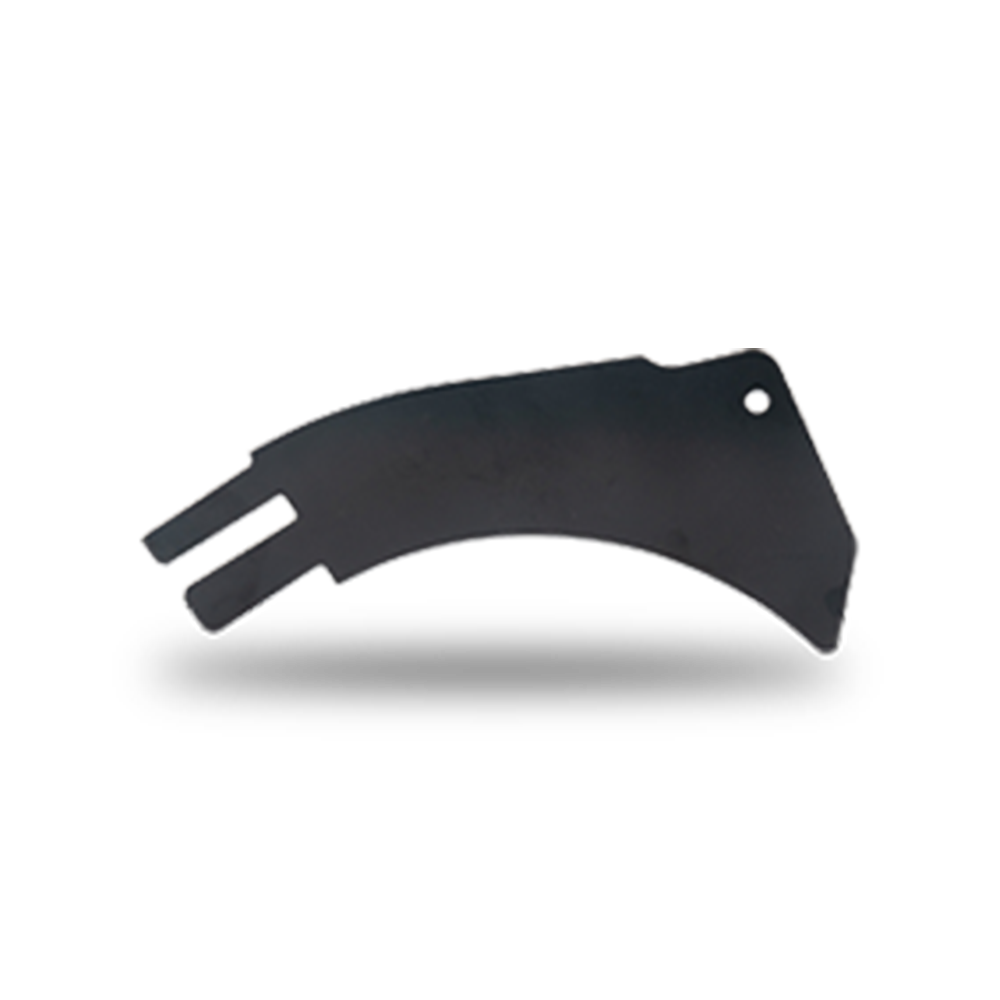
A Riving Knife is an important safety component installed behind the circular saw blade to prevent material pinching and kickback during cutting operations. Manufactured from high-strength steel plates, it provides excellent rigidity and stability, ensuring a consistent cutting path and improved operational safety. The thickness of the riving knife is precisely matched to the corresponding saw blade specifications to ensure proper alignment and performance. Suitable for various table saws and woodworking machines, the riving knife significantly reduces safety risks and enhances overall cutting stability, making it an indispensable safety accessory in woodworking applications.
Stop Kickback Fast: How a Table Saw Riving Knife Works
What This Safety Device Does on a Table Saw and Why You Need One
Ever had a board suddenly fly back at you from a table saw? That event has a name: kickback. A thin metal plate behind the blade exists to stop that from happening.
This part attaches directly behind the blade. Unlike older splitters, it moves up and down with the blade. The Table Saw Knife tilts right along with it. Raise or lower the blade height? The knife follows.
In some manuals, you will see the term riving blade used instead. Same part. Different wording.
How It Stops Kickback – A Simple Explanation
Picture this: You push a board through the blade. The blade cuts a narrow slot called the kerf. But wood has internal tension. Sometimes, right after the blade passes, the two sides of that slot try to squeeze shut.
If they close against the back of the blade? The blade grabs the wood and throws it backward. That is kickback.
The device sits inside that same kerf, directly behind the blade. Its thickness matches the blade's body (not counting the teeth). So it holds the kerf open. The wood cannot pinch the blade from behind.
That is the whole job. Simple. Effective.
Old-Style Splitter vs. This Device – What Changed Over Time
Old table saws used a splitter. A splitter does not move with the blade height. Lower the blade, and a gap opens between the blade and the splitter. That gap lets wood shift sideways. Not ideal.
A modern riving knife eliminates that gap. It stays close to the blade at every height. (That's one of the two times the full term appears in this article.)
Here is another difference:
- Splitter – Sits above the blade's top arc. You have to remove it for non-through cuts (dadoes, grooves, rabbets).
- Riving knife – Sits slightly lower than the blade's top. You keep it installed for those cuts.
One place a splitter still wins? Retrofitting an old saw. A true needs special mounting points on the saw's internal parts. Many older saws cannot accept one.
When It Comes Off?
You do not remove this part often. But there are specific jobs where it gets in the way:
- Stacked dado blades – These cut a wide groove. The device is too thin to fill that groove.
- Tenoning jigs – The jig's movement can hit it.
- Very narrow grooves – It blocks the cut path.
In those cases, you take it off. Then you rely on other methods: keeping the fence parallel to the blade, using featherboards, and pushing the material steadily.
How to Check Alignment – A Quick Process
A misaligned device makes things worse. It can push the workpiece sideways or bind against the kerf walls. Checking alignment takes two minutes.
Get a combination square or a straightedge. Lay it flat on the saw table so it touches both the blade body (not the teeth) and the second and final use of the full term. The knife should contact the straightedge along its full length.
If not? Look for adjustment screws on the bracket. Loosen the lock screws. Turn the adjustment screws until it lines up. Tighten everything back down.
Also, check that the part sits centered relative to the blade. Some saws use thin shims behind the mounting bracket. Add or remove shims to shift it left or right.
Real Workshop Scenarios
Here is where this safety device does its job without you even thinking about it:
- Ripping long boards – Main use. Wood tension can close the kerf immediately behind the blade. The device holds it open.
- Crosscutting with a miter gauge – Many people assume it is only for ripping. But crosscuts can pinch too. It stays in place and causes no trouble.
- Cutting plywood – Sheet goods have less internal tension, but they can sag. The device keeps the cut line clean.
- Bevel cuts – Tilt the blade to 45 degrees? The part tilts with it. A splitter would need to be removed.
- Dado cuts – Because it sits below the blade's top arc, you leave it installed for non-through cuts.
keep in touch
-
We are committed to providing durable, reliable, and efficient cutting solutions for global B2B clients and partners.
-
Useful Links
Home Products About Us Manufacturing Custom Service News Contact Us -
Contact Us
+86-579-89270208
+86-579-89270636ch001@changhengsaws.comNo. 102, Huacheng East Road, Chengxi Industrial Zone, Yongkang, Zhejiang, China -
Mobile Web
