


 Industry News
How Do TCT Saw Blade Manufacturers Manage Blade Flatness
One Source for Every Cutting Blade Need
A circular saw blade may look genuinely simple once it's finished, but its flat shape is actually the result of many production steps working together in sequence. For TCT Saw Blade Manufacturers, blade flatness matters because the blade needs to remain stable as it moves through production, storage, installation, and cutting operations on a customer's machine.
A flat blade can be genuinely easier to handle, inspect, mount, and integrate into woodworking equipment sitting on a shop floor. Flatness doesn't get created at one single stage, either, because material preparation, forming, heat treatment, tooth preparation, grinding, and handling can all influence the final shape that leaves the factory.
For manufacturers serving different woodworking applications, controlling these changes is part of keeping production genuinely consistent from one batch to another.
What Does Blade Flatness Mean?
Blade flatness describes how closely the blade body remains within its intended flat shape throughout its production life. A circular saw blade is expected to maintain a relatively stable form, rather than develop unwanted bends, waves, or uneven areas across its surface.
This matters because the blade rotates as part of a larger mechanical assembly once it reaches a customer's machine, so changes in its shape can influence how it behaves during use.
| Flatness Concern | Possible Effect |
|---|---|
| Uneven blade body | May affect rotational stability |
| Local bending | Can make mounting more difficult |
| Surface distortion | May complicate inspection |
| Uneven support area | Can influence blade seating |
| Shape changes during handling | May affect finished condition |
The exact flatness requirements depend on the blade design and intended application, but the basic manufacturing challenge stays genuinely similar across product lines. The blade body needs to retain its intended form throughout the entire production process, from raw material to shipping box.
Why Is Flatness Important for TCT Circular Saw Blades for Wood?
A TCT Circular Saw Blade for Wood contains a metal blade body and cutting teeth designed specifically for woodworking applications on a job site or shop floor. The blade body provides the structure that carries the teeth while the machine rotates the complete assembly at speed.
If the body develops unwanted deformation somewhere along the way, the blade may not behave in the same way as a properly formed blade would once it's mounted. Flatness therefore has a genuine connection with mounting, rotation, handling, and overall operating stability once the blade reaches a customer.
Manufacturers need to consider the blade body as more than a simple support for the teeth sitting around its edge. Its shape is genuinely part of the finished product and can influence how the blade interacts with the machine carrying it.
How Does Material Preparation Affect Blade Flatness?
Flatness control begins well before the blade body ever reaches the forming stage on the line. The material needs to arrive in a condition that allows it to get processed into a stable circular shape without fighting the process at every step.
Material condition can influence how the body responds to cutting, forming, heating, and grinding later on. If the material already contains unwanted deformation when it arrives, later production steps may need to compensate for that problem rather than starting clean.
Manufacturers can therefore inspect incoming material before it enters the main production process at all.
| Production Check | Purpose |
|---|---|
| Material surface | Helps identify visible irregularities |
| Material shape | Supports consistent processing |
| Material condition | Helps determine processing suitability |
| Storage condition | Helps prevent unnecessary deformation |
Good material handling gives later production stages a genuinely more consistent starting point to work from. This doesn't remove the need for later inspection down the line, but it can reduce avoidable variation during manufacturing overall.
How Can Cutting the Blade Body Influence Flatness?
The blade body usually begins as a larger piece of material that needs shaping into the required circular form through cutting. Cutting changes the material's shape and can introduce stresses around the newly formed edge as it takes shape.
The cutting process therefore needs control so the body remains suitable for later production stages waiting down the line. Manufacturers may inspect the cut body before continuing with tooth preparation or other operations that follow.
A body that already shows unwanted deformation can get separated for further evaluation, rather than allowing the issue to continue through the entire production flow unchecked. This approach helps keep later processes focused on blades that are genuinely suitable for continued processing.
How Does Heat Influence Blade Flatness?
Heat can affect metal shape during manufacturing in ways worth watching closely. When a blade body gets exposed to heating and then cools back down, changes within the material can sometimes influence its final form.
This makes temperature-related production stages genuinely relevant to flatness control throughout the process. Manufacturers need to consider how the body gets supported and handled during these heating and cooling stages.
| Heat-Related Stage | Flatness Consideration |
|---|---|
| Heating | Body may respond to temperature changes |
| Holding | Shape needs suitable support |
| Cooling | Uneven changes may influence form |
| Post-treatment handling | Body should be protected from deformation |
The exact process depends on the blade design and manufacturing method used by a given plant. The broader principle holds that any stage capable of changing the blade body needs consideration when managing flatness across a production run.
Can Grinding Affect Blade Flatness?
Grinding gets used to prepare different parts of a saw blade, including areas around the cutting teeth and blade body itself. Because grinding removes material and creates contact between the tool and blade, the process needs careful management throughout.
Uneven grinding can influence how material gets removed from different areas of the same blade. This can create differences that affect the final shape of the blade once grinding wraps up.
Manufacturers can monitor grinding conditions and inspect the blade after relevant operations finish. A suitable production sequence helps prevent a correction in one area from creating a genuinely new issue somewhere else on the same part.
How Do TCT Saw Blade Manufacturers Control Flatness During Production?
Flatness control works genuinely better when it gets included throughout production, rather than left until the final inspection at the end of the line. TCT Saw Blade Manufacturers can divide the process into several inspection points spread across the workflow.
This allows changes to get identified genuinely closer to where they actually occur, rather than discovered too late. A production flow may include material inspection before processing even starts, followed by body inspection after forming wraps up.
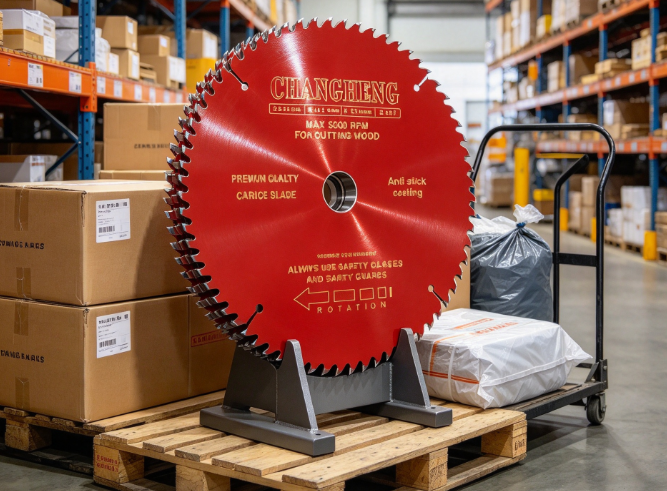
Shape checks after heat-related processes come next, along with inspection after grinding and tooth preparation finish their work. Final flatness inspection before packaging rounds out the sequence.
Each stage provides an opportunity to identify changes in the blade body before they compound. This can also help production teams understand where a recurring issue may be developing across multiple batches.
Why Is Flatness Inspection Needed After Heat Treatment?
A blade can appear genuinely stable before a heat-related process and then change shape afterward once it cools. This is why checking the blade only before treatment doesn't provide enough information to catch every problem.
After the blade has cooled and returned to a suitable handling condition, manufacturers can inspect its shape again with fresh eyes. If unwanted deformation turns up, the blade can get assessed before moving into later production stages waiting ahead.
This reduces the risk of carrying a flatness issue through additional processing steps unnecessarily. Inspection at this stage also provides useful feedback for production teams reviewing the relationship between material condition and process handling.
How Can Manufacturers Correct a Blade That Is Not Flat?
Not every blade that shows shape variation needs discarding outright. Depending on the manufacturing process and product design involved, a suitable correction process may be available to bring it back in line.
The correction method needs to match the cause and location of the deformation found. An operator may need to examine whether the issue came from material preparation, heat exposure, mechanical handling, or another production stage entirely.
| Possible Cause | Review Area |
|---|---|
| Material deformation | Incoming material condition |
| Heat-related change | Heating and cooling process |
| Mechanical pressure | Handling and support |
| Grinding variation | Material removal process |
| Storage damage | Packaging and warehouse handling |
Correction should stay controlled, rather than treated as a simple bending operation done by feel. An uncontrolled adjustment may create another deformation elsewhere or affect the blade's overall condition unexpectedly.
What Role Does Blade Body Support Play During Production?
A circular blade is relatively thin compared with its overall diameter, so how it gets supported during manufacturing can genuinely affect its shape. If the body sits on an unsuitable surface, pressure may concentrate in one area rather than spreading evenly.
Repeated handling can also introduce bending if workers or equipment apply force in an uncontrolled way during a shift. Production equipment should therefore support the blade appropriately during both processing and inspection stages.
The same consideration applies when blades move between workstations across the floor. Careful handling helps protect the shape already achieved during earlier production stages upstream.
How Does Tooth Preparation Relate to Blade Flatness?
The cutting teeth are a genuinely important part of a TCT Saw Blade for Wood, but tooth preparation also needs to take place without unnecessarily disturbing the blade body underneath. Tooth formation, tooth attachment, and grinding can involve repeated mechanical contact with the blade throughout.
If the blade body isn't adequately supported during these operations, unwanted movement may occur and throw off the shape. Manufacturers therefore need to consider the relationship between tooth preparation and the body of the blade as one connected system.
The finished blade needs to combine a suitable tooth arrangement with a genuinely stable body shape underneath it.
Can Blade Storage Affect Flatness After Production?
Manufacturing control doesn't end the moment the blade leaves the production line and heads to the warehouse. Storage conditions can also influence the physical condition of a finished blade sitting on a shelf.
If blades get stacked, moved, or supported incorrectly during storage, pressure may land on the blade body unevenly. Packaging can help protect the finished product during transportation and storage across that whole journey.
| Storage Practice | Flatness Consideration |
|---|---|
| Stable support | Helps prevent unwanted bending |
| Suitable packaging | Protects the blade during movement |
| Organized storage | Reduces accidental pressure |
| Careful handling | Helps preserve finished shape |
For B2B buyers, product condition at delivery can matter genuinely as much as production consistency did earlier. A well-controlled manufacturing process still needs suitable handling after the blade has already been completed.
How Does Finished Product Inspection Check Blade Flatness?
Final inspection provides an opportunity to confirm the completed blade remains within the intended production condition before it ships out. The inspection method depends on the product and manufacturing environment a given facility uses.
The blade can get placed on a suitable inspection surface and checked for visible deformation or unwanted movement across its face. Manufacturers may also use dedicated inspection equipment where the application calls for it.
The genuinely important point is that the finished blade should get evaluated as a complete product, rather than only through its individual components in isolation. Inspection can include the blade body, tooth area, mounting region, and overall physical condition together.
Why Does Flatness Consistency Matter for TCT Saw Blade Manufacturers?
B2B buyers often need products that behave consistently across repeated orders placed over months or years. If blade shape varies significantly between production batches, users may notice differences during handling, installation, or machine operation on their end.
For TCT Saw Blade Manufacturers, maintaining consistent production therefore involves genuinely more than checking whether an individual blade looks acceptable on its own. Production teams can monitor recurring flatness changes and connect them with specific manufacturing stages across the line.
This creates a feedback loop between inspection and production that keeps improving over time. When a pattern gets identified, the relevant process can get reviewed, rather than treating every affected blade as an isolated case standing alone.
How Can Manufacturers Use Inspection Results to Improve Production?
Inspection results can provide genuinely useful information about how the production process behaves over time across many runs. If a particular stage repeatedly produces shape changes, manufacturers can review the material, equipment, handling method, or process sequence involved at that step.
This approach makes flatness control part of production management, rather than a simple final sorting task tacked onto the end. Inspection records can also help production teams compare different stages of the same manufacturing process side by side.
| Inspection Result | Possible Production Response |
|---|---|
| Stable blade body | Continue normal process monitoring |
| Local deformation | Review the related production stage |
| Repeated shape variation | Check process consistency |
| Handling-related damage | Review movement and storage |
| Post-treatment changes | Review heat and cooling stages |
The purpose is understanding the source of variation and improving process control going forward rather than reacting case by case.
What Should Buyers Ask TCT Saw Blade Manufacturers About Flatness?
B2B buyers may want to understand how a manufacturer manages blade shape during production before placing a large order. The discussion doesn't need to focus on complex manufacturing language to be useful.
Useful questions can include asking how the blade body gets inspected during production, and at which stages flatness actually gets checked along the line. Asking how deformed blade bodies get handled matters too, along with how finished blades get protected during storage.
How consistency gets maintained between production batches is worth raising, as is how blade bodies get supported during processing itself. These questions can help buyers understand whether flatness gets treated as part of the complete production process, rather than an afterthought.
They can also make communication genuinely easier when a buyer has specific installation or operating requirements to convey upfront.
How Does Flatness Fit Into TCT Circular Saw Blade for Wood Production?
The manufacturing of a TCT Circular Saw Blade for Wood involves several connected stages that build on each other in sequence. Material preparation affects forming, forming affects later processing, heat-related stages can change the body, and grinding can influence the finished shape that results.
The production sequence therefore needs viewing as a connected process rather than a series of disconnected steps. Flatness control can get built into each relevant stage, instead of getting treated as a single inspection tacked on at the end.
This approach also supports communication between production, inspection, packaging, and customer service teams working across the same facility.
How Can TCT Saw Blade Manufacturers Manage Finished Product Quality?
Finished product quality develops through many small production decisions made across an entire manufacturing run. For TCT Saw Blade Manufacturers, blade flatness connects with material preparation, body forming, heat management, grinding, tooth preparation, handling, inspection, and storage all at once.
A blade body that remains in its intended form is genuinely easier to inspect and prepare for installation once it reaches a customer's shop. The same principle applies to a TCT Saw Blade for Wood, where the body and tooth structure need to function together as part of the finished product a customer actually uses.
Manufacturers can therefore treat flatness as an ongoing production responsibility, with inspection and handling practices supporting the blade from material preparation all the way through finished-product storage before it ships.
keep in touch
-
We are committed to providing durable, reliable, and efficient cutting solutions for global B2B clients and partners.
-
Useful Links
Home Products About Us Manufacturing Custom Service News Contact Us -
Contact Us
+86-579-89270208
+86-579-89270636ch001@changhengsaws.comNo. 102, Huacheng East Road, Chengxi Industrial Zone, Yongkang, Zhejiang, China -
Mobile Web
