Industry News Industry News
Home / News / Industry News / How to Choose Reliable Band Saw Blade Manufacturers for Metal Cutting

How to Choose Reliable Band Saw Blade Manufacturers for Metal Cutting


One Source for Every Cutting Blade Need

A band saw blade can cause a surprising amount of trouble for something that looks so simple. One blade keeps cutting without much fuss, while another wears out quickly, leaves rough edges, or starts drifting away from the cutting line. Workers end up stopping the machine, changing blades, and checking parts that should have been ready to move on.

For a factory, those interruptions cost money. For a distributor, poor blade performance can mean customer complaints and repeat orders going elsewhere.

That's why choosing Band Saw Blade Manufacturers shouldn't come down to who offers the lowest price. You need a blade that suits your metal, your machine, and the amount of cutting you do. You also need a supplier that can deliver the same specification again when you reorder.

A good way to approach the search is to start with your actual cutting problems. From there, look at blade materials, tooth design, manufacturing quality, and how the supplier handles technical questions. You don't need to make the purchasing process complicated, but a little checking upfront can save a lot of frustration later.

Band Saw Blade Manufacturers for Industrial Metal Cutting

Start With the Metal You Need to Cut

Before asking manufacturers for quotations, get clear about the job. A supplier can't recommend a suitable blade if all it knows is that you need one for metal cutting.

Think about what goes through your saw on a normal day. Are you cutting mild steel bars, stainless steel tubes, aluminum profiles, or thick blocks of alloy steel? Do you make a few cuts every week, or does the machine run for hours at a time?

These details change what you'll need.

Here's the information worth preparing:

  • Material: Tell the supplier the metal grade where possible. Mild steel and stainless steel don't behave exactly the same during cutting.
  • Workpiece size and shape: Cutting a thin-walled tube is different from cutting a solid steel bar. The blade needs a suitable tooth arrangement for both.
  • Production volume: A workshop with occasional jobs may not need the same blade as a factory running repeated cuts throughout the day.
  • Machine details: Confirm the blade length, width, thickness, and other requirements specified by your band saw.
  • Cutting results: Decide what matters to your operation, such as cut accuracy, surface finish, cutting time, and blade life.

Don't leave out the problems you're already having. Maybe the teeth become blunt too soon. Perhaps the cut isn't square, or blades keep breaking near the welded joint. Those details give the manufacturer something useful to work with.

Otherwise, you may get a quotation for a standard blade that looks right on paper but doesn't solve anything on the shop floor.

Which Blade Material Makes Sense for Your Work?

Band saw blades come in different materials and constructions. The right choice depends on the job, so it's worth asking what each option can actually do before paying extra for a particular grade.

Carbon steel blades are used for certain general-purpose and light-duty applications. They may be suitable for less demanding cutting work, but the material grade and operating conditions still matter. A low purchase price won't mean much if the blade struggles with the metal you're processing.

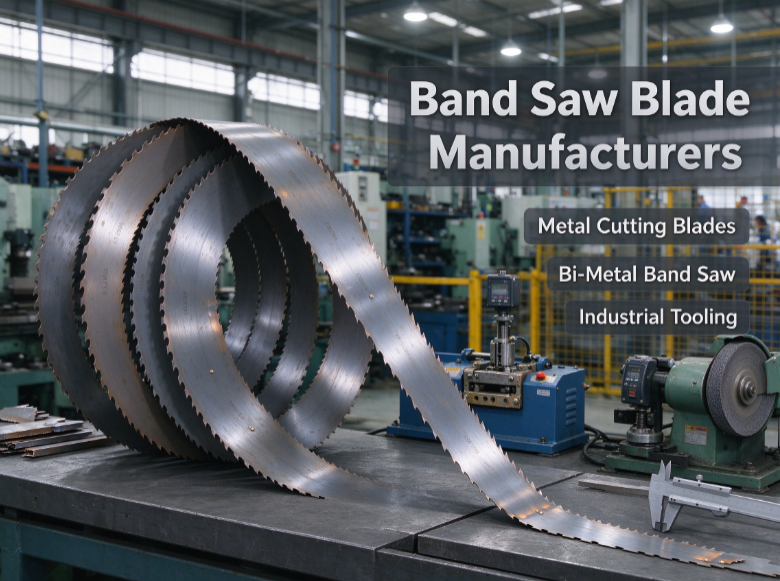
Bi-metal blades are common in industrial metal cutting. They generally combine high-speed steel teeth with a more flexible backing material. The teeth handle the cutting, while the backing helps the blade flex as it travels around the machine wheels. Depending on the grade and tooth design, bi-metal blades can be used for carbon steel, stainless steel, and various alloy steels.

Carbide-tipped blades are used for selected demanding applications, including some hard-to-machine materials and high-volume jobs. They usually cost more upfront and need suitable machine conditions. Whether that extra expense pays off depends on how much material you're cutting, how the blade performs, and how often it needs replacing.

Don't be shy about asking a manufacturer to explain the difference between its grades. Which materials is each blade intended for? Are there restrictions on cutting speed or workpiece size? What conditions does the supplier recommend?

A useful answer should relate to your application, not just repeat a product description.

The way a blade is made matters, too. Tooth formation, heat treatment, backing material, and joint quality can all affect how it performs. Two blades may have similar specifications but behave quite differently if manufacturing isn't consistent.

If you're buying endless blades, ask how the welded joint is checked. Poor welding or uneven finishing can contribute to premature failure. You don't need to inspect every production step yourself, but the manufacturer should be able to explain how it checks the finished product.

Get the Tooth Design and Blade Size Right

A blade can be made from suitable material and still be wrong for the job. Tooth pitch, tooth shape, and blade dimensions all affect how it cuts.

Tooth pitch refers to the spacing between teeth. Coarse-tooth blades have more room for chips to escape, which can help when cutting larger solid sections. Fine-tooth blades have more teeth engaging with the material and may be more suitable for thinner sections.

Take thin-walled tubing as an example. If too few teeth engage the material at once, cutting can become rough or unstable. On a thick solid bar, a very fine tooth pitch may leave too little space for chips, allowing heat and debris to build up.

There's no need to guess at the right pitch if you can give the supplier the workpiece details. Describe what you're cutting and ask which tooth configuration suits that material and shape.

Variable-pitch blades are another option. Their tooth spacing varies along the blade, which may help reduce vibration in suitable applications. But they won't fix every noisy or rough cut. Feed pressure, machine condition, and workpiece clamping need checking as well.

Tooth set is worth considering, too. It gives the blade body clearance as it passes through the cut. If the tooth geometry doesn't suit the application, you may see rough edges, uneven wear, or inaccurate cuts.

Then there's the blade size itself. Check the required length, width, and thickness against the machine manual or existing blade specification. A blade with the wrong dimensions can create installation or tracking problems even if the material and teeth are suitable.

For a custom order, send the manufacturer your machine model and current blade dimensions. If you're requesting a different tooth pitch or a nonstandard size, have the proposed specification confirmed before production starts.

How Can You Tell Whether a Manufacturer Controls Quality?

Getting one good sample is encouraging, but what happens when you order 200 blades? For distributors and factories that buy regularly, consistency across batches matters just as much as the performance of an individual blade.

Ask the manufacturer how it checks materials, heat treatment, tooth geometry, dimensions, and welded joints where applicable. The process will vary between products, but the supplier should be able to explain how it keeps the finished blades within the agreed specifications.

Quality detail

What to ask about

Material grade

How does the manufacturer confirm the material matches the agreed specification?

Tooth geometry

Are tooth pitch, shape, and set checked during production?

Heat treatment

How are hardness and treatment consistency monitored?

Welded joint

How are joints inspected on endless blades?

Blade dimensions

Are length, width, and thickness checked before shipment?

Batch records

Can the supplier identify and review the production batch if a problem occurs?

You don't need a pile of paperwork for every ordinary order. What matters is whether the manufacturer can provide useful information when your application requires it.

For a job with tight tolerances or specific cutting requirements, agree on the acceptance criteria before placing the order. That way, both sides know what counts as an acceptable product.

It's also worth asking how complaints are handled. If a batch of blades fails earlier than expected, what information should you provide? Can the factory review its production records? What happens if the problem is traced back to the product?

A clear process makes dealing with a bad batch a lot less painful.

Find Out Whether the Supplier Understands Cutting Problems

Even a well-made blade can perform badly when the operating conditions are wrong. The cutting speed may be too high, the feed pressure may be excessive, or the machine may have a tracking or alignment problem.

This is where a manufacturer's technical knowledge can be useful.

Suppose your blades keep losing their teeth early. You might assume the blade material is poor, but the problem could also come from incorrect operating parameters or a tooth pitch that doesn't suit the workpiece.

Repeated blade breakage is another example. Tension, wheel alignment, workpiece movement, and the welded joint may all need checking. Simply installing another blade without looking into the cause can leave you with the same problem a few days later.

When talking to potential suppliers, ask what kind of support they offer after delivery. Can they help you select a suitable blade? Do they provide operating recommendations or break-in instructions? If a cutting problem develops, can their technical team help narrow down the possible causes?

For overseas buyers, it's also useful to know how technical questions are handled and what information the supplier needs. Machine details, material specifications, photos, and cutting records can all make it easier to understand what's going wrong.

A manufacturer doesn't need to provide every kind of engineering service. It should, however, understand its own blades and be willing to discuss how they're used.

Check Production Capacity and Customization Options

Product quality is only part of the purchasing decision. You also need to know whether the supplier can deliver the quantity you need and keep future orders consistent.

Ask about standard product availability, production lead times, minimum order quantities, and its ability to handle repeat orders. If you need customized blades, confirm which specifications can be changed and how the final version is approved.

Common options include:

  • Blade dimensions: Length, width, and thickness need to suit the machine.
  • Tooth configuration: Pitch and geometry can be selected for different materials and workpiece shapes.
  • Blade material: The grade should match the intended cutting conditions.
  • Packaging and labeling: These may be needed for distributors and private-label orders.
  • Repeat-order specifications: Approved details should be recorded so later orders match the original requirements.

Not every manufacturer offers every option. Check its capabilities before committing to a customized product, especially if your order involves unusual dimensions or a specific tooth design.

If you change several specifications at once, test the new blade before placing a large order. Otherwise, if the cutting results change, you may struggle to work out which modification caused the difference.

For regular purchases, keep the approved specification and sample test results on file. If your material or machine changes later, review the blade selection instead of automatically reordering the same model.

Look Beyond the Purchase Price

A low quotation is tempting, particularly when you're ordering in bulk. But the blade price doesn't tell you how much it will cost to keep your cutting operation running.

A cheaper blade might wear out sooner, need more frequent replacement, or leave cuts that require additional finishing. Each blade change also takes time, and machine downtime can cost more than the saving on the original purchase.

When comparing suppliers, look at purchase price alongside blade life, cutting time, replacement frequency, and cut quality. If you have the data, work out the cost per cut or per unit of material processed.

For example, a higher-priced blade may make financial sense if it lasts longer and maintains the required cutting accuracy. On the other hand, an expensive blade may not be necessary for occasional light-duty work.

You can get a clearer picture by testing samples under similar conditions. Use comparable workpieces and machine settings, then record how many cuts each blade completes, how long the job takes, and whether any quality issues appear.

The numbers don't have to be complicated. Even a basic record of blade changes and cutting time can help you compare products on something more useful than price alone.

Questions to Ask Before Ordering in Bulk

Before confirming a manufacturer, make sure the practical details are clear.

  1. Which blade specification suits our material and workpiece dimensions?
  2. Can you provide the relevant product specifications and inspection information?
  3. How do you check blade dimensions, tooth geometry, heat treatment, and weld quality where applicable?
  4. Can we test samples under our actual cutting conditions?
  5. How do you keep repeat production batches consistent?
  6. What happens if blades arrive defective or wear out earlier than expected?
  7. What are the delivery times, minimum order quantities, and customization options?

Pay attention to how the supplier answers, not just what it promises. A clear explanation backed by relevant product information gives you more to work with than a broad claim about quality.

Build a Supplier Relationship That Holds Up Over Time

The job doesn't end when the first order arrives. If a blade works well, keep its specifications and cutting results on file. That gives you a reliable reference when it's time to reorder.

Record the material grade, blade dimensions, tooth configuration, operating conditions, and service life. If a later batch behaves differently, these details help you compare results and discuss the problem with the manufacturer.

For distributors and factories with several cutting machines, organized specifications can also make stock management easier. Different jobs may require different blades, but clear records reduce confusion when purchasing needs to be repeated.

In the end, a reliable Band Saw Blade Manufacturer should supply blades that suit the application, keep orders consistent, explain technical details clearly, and communicate honestly about delivery. Check the product, test it where practical, and look at the cost of using it over time. That's a much safer way to choose a supplier than making the decision from a quotation alone.