



TCT Chop Saw Blade vs HSS Blade: Which Fits Your Job?
One Source for Every Cutting Blade Need
Choosing a saw blade for metal cutting sounds like a straightforward procurement decision until you are dealing with blade wear faster than expected, cut surfaces that do not meet quality requirements, or replacement costs that are climbing faster than production output justifies. The material and tooth geometry of the blade you run directly determine how long it lasts, how cleanly it cuts, and what it actually costs per cut over a production cycle. A TCT Chop Saw Blade and an HSS blade are built on fundamentally different material principles, and understanding where each excels — and where each falls short — is the decision that determines whether your blade spend is working for you or against you.
What TCT and HSS Blades Actually Are
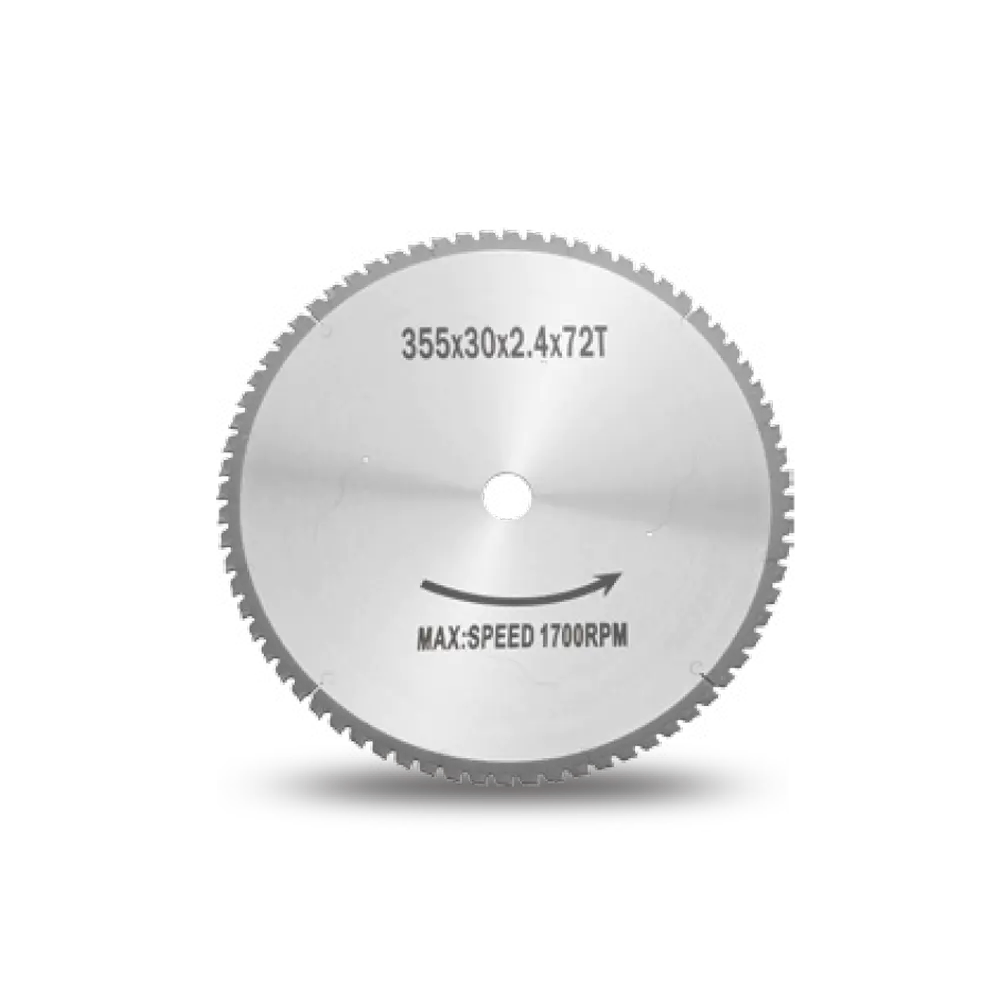
TCT Blades Use Carbide Tips Bonded to a Steel Body
TCT stands for tungsten carbide tipped. The blade body is made from alloy steel — tough enough to absorb vibration and flex under load — but the cutting teeth are tipped with small carbide inserts brazed to the tooth seats. Tungsten carbide is significantly harder than steel, which is why carbide-tipped blades hold a cutting edge across far more cuts than an all-steel blade could.
The combination matters. Carbide provides wear resistance at the cutting edge. The steel body provides the toughness and flexibility that a pure carbide disc cannot — carbide is brittle under shock and would crack if used without the steel substrate. It is a genuinely engineered solution, not just hard material on a blade body.
HSS Blades Are Machined From a Single Steel Alloy
High-speed steel is an alloy that contains tungsten, molybdenum, chromium, and vanadium in proportions that give it significantly better heat resistance and wear resistance than standard carbon steel, while retaining the toughness and machinability of steel. An HSS blade is ground from a single piece of this alloy — no brazed tips, no composite structure.
The practical result is a blade that can be resharpened repeatedly by grinding. When the cutting edge wears, material is removed to expose fresh, sharp steel. With correct maintenance, an HSS blade can go through multiple sharpening cycles before it reaches the end of its useful life. That regrinding capability is a real economic asset in the right context.
The Core Performance Difference Between the Two
Hardness vs. Toughness: Why Both Matter in Cutting
Hardness and toughness are not the same thing, and the difference between them is central to understanding why these two blade types behave differently in use.
Hardness is resistance to surface wear and deformation. Carbide is extremely hard — harder than most metals being cut — which is why TCT blades hold their edge so much longer. Toughness is the ability to absorb impact and flex without fracturing. Steel is tough. It can take vibration, interrupted cuts, and uneven loading without cracking. Carbide, for all its hardness, is relatively brittle.
An HSS blade handles the kinds of cutting conditions — interrupted cuts, thin-wall tube, vibration from unstable workpieces — where the shock loading would chip or crack carbide inserts. A TCT Chop Saw Blade handles the sustained hard-material cutting conditions where HSS would wear too quickly to remain cost-effective.
Does Cutting Speed Differ Between TCT and HSS Blades?
It does, substantially. Carbide retains its hardness at elevated temperatures — it does not soften the way steel does when cutting heat builds up. This means a TCT Chop Saw Blade can run at higher cutting speeds without the edge degrading from heat. Faster cutting speed means higher throughput on a production line.
HSS handles heat better than carbon steel but still softens at elevated temperatures if pushed beyond its design range. For this reason, HSS blades are typically run at lower cutting speeds. In a low-volume or intermittent cutting environment, this is not a significant limitation. In a high-throughput production context where the saw is running continuously, the speed difference translates directly into output capacity.
Lifespan and Cost: How the Numbers Actually Work Out
TCT Lasts Longer Per Blade, HSS Costs Less Upfront
The price difference between a TCT Chop Saw Blade and an HSS blade for equivalent sizes is real. Carbide inserts, brazing, and the manufacturing precision required for a quality TCT blade add cost that is visible in the purchase price. For a buyer looking at per-unit cost, HSS wins at the point of sale.
The calculation changes when you factor in cuts per blade before replacement or regrinding becomes necessary. A TCT blade typically delivers significantly more cuts before the edge degrades to the point where cut quality drops. Spread the blade cost across the number of cuts it produces, and the cost-per-cut picture often shifts toward TCT in high-volume applications.
What Does Regrinding Actually Mean for Operating Costs?
This is where the HSS advantage is most concrete. A worn HSS blade can be sent to a grinding shop or reground in-house with the right equipment, restoring the cutting edge for a fraction of the cost of a new blade. Multiple regrind cycles are possible before the blade is worn down to a point where it cannot be resized to a usable diameter.
TCT blades can also be re-tipped — worn carbide inserts are removed and replaced with new ones — but this process requires specialized equipment and is typically economical only for larger-diameter blades where the steel body represents significant value. For smaller chop saw blades, replacement rather than re-tipping is the standard practice.
For operations that have sharpening capability or a reliable sharpening service nearby, HSS regrinding is a genuine cost advantage. For operations without that infrastructure, the total cost comparison shifts toward TCT.
Matching Blade Type to Cutting Application
What Materials and Conditions Favor TCT?
The scenarios where a TCT Chop Saw Blade delivers consistent advantages:
- Cutting stainless steel, hardened steel, or alloys with high hardness
- Thick-wall tube and solid bar stock where the cutting arc through material is long
- High-volume production lines where blade changes interrupt throughput
- Applications where cut surface finish quality matters and burr formation needs to be controlled
- Dry cutting applications where coolant is not available to manage heat on an HSS blade
In these conditions, the carbide edge holds up where HSS would wear quickly, and the cut quality from a sharp carbide tooth is consistently clean across a long production run.
What Conditions Make HSS the More Practical Choice?
HSS is not the lesser option — it is the appropriate option for specific applications:
- Thin-wall tube and hollow sections where the interrupted cut creates shock loading on the blade
- Softer metals including mild steel, aluminum, and copper alloys where material hardness is not the limiting factor
- Lower-volume or job-shop environments where blade cost per unit is more significant than cost per cut
- Applications where workpiece clamping is not always rigid and vibration is a consistent factor
- Operations with in-house sharpening capability where regrinding cost is predictable and low
Running an HSS blade on soft material in a job-shop environment and expecting it to wear quickly is not a failure of the blade — it is a reasonable match of tool to application. The same blade on hard stainless steel in a production line would be an expensive mismatch.
Side-by-Side Comparison for Application Planning
How TCT and HSS chop saw blades compare across the dimensions that matter for production planning:
| Dimension | TCT Chop Saw Blade | HSS Blade |
|---|---|---|
| Tooth material | Tungsten carbide tips | High-speed steel throughout |
| Edge hardness | High | Moderate to high |
| Shock resistance | Moderate (carbide can chip) | High |
| Cutting speed | Higher | Lower |
| Blade lifespan | Long | Moderate |
| Regrinding | Limited (re-tipping for large blades) | Yes, multiple cycles |
| Upfront cost | Higher | Lower |
| Cost per cut (high volume) | Lower | Moderate to higher |
| Suited for hard materials | Yes | Limited |
| Suited for thin-wall/interrupted cuts | Limited | Yes |
| Suited for high-production lines | Yes | Moderate |
Neither blade type dominates across every category. The decision depends on where the application sits across these dimensions — not which blade type is universally preferred.
How Tooth Geometry Affects Cutting Performance
Tooth Count and Profile Are Specific to the Material Being Cut
Beyond the material difference between TCT and HSS, tooth geometry is a specification that significantly affects cut quality and blade performance. Tooth count determines the number of cutting contacts per revolution. Higher tooth counts produce smoother surface finishes but remove less material per pass. Lower tooth counts are more aggressive, remove material faster, and handle thicker sections more effectively.
For a TCT Chop Saw Blade used on thick solid bar, a lower tooth count with a flat or slightly positive rake angle drives material removal efficiently. For thin-wall tube or surface-finish-sensitive applications, a higher tooth count with a geometry designed to reduce burr formation produces cleaner cuts with less secondary finishing required.
Does Blade Diameter Affect Which Type to Use?
Diameter affects the available cutting depth and the peripheral speed at a given RPM. Both TCT and HSS blades are available across the standard diameter range for chop saws. The diameter selection follows the machine specification and the cutting depth required — blade type does not change that constraint.
What does change with diameter is the economics of re-tipping for TCT blades. Larger diameter blades represent more steel body value and more carbide inserts, making re-tipping economically viable. Smaller diameter blades are typically more economical to replace outright when the carbide wears to the point where cut quality drops.
Evaluating Blade Suppliers for Industrial Procurement
Getting the blade type right is one part of the decision. Getting consistent quality from a supplier is the other. Blade-to-blade variation in carbide grade, brazing quality, or tooth geometry in a production batch creates inconsistent cutting performance and unpredictable blade life — both of which undermine the cost-efficiency calculation regardless of which blade type was chosen.
For production engineers and procurement teams sourcing saw blades at volume, supplier consistency across production batches is as important as the specification of any individual blade. A Saw Blade Distributor relationship that provides technical support for application matching, consistent product quality documentation, and reliable supply availability simplifies procurement and reduces the risk of production disruption from specification drift. Zhejiang Changheng Tools Co., Ltd. manufactures TCT Chop Saw Blades and related cutting tools for industrial metal cutting applications, with product configurations covering different tooth geometries, diameters, and material specifications for a range of cutting conditions. Contacting their team to discuss your specific cutting application, material type, production volume, and blade performance requirements is a practical way to determine whether their product range and supply capability align with your procurement needs.
keep in touch
-
We are committed to providing durable, reliable, and efficient cutting solutions for global B2B clients and partners.
-
Useful Links
Home Products About Us Manufacturing Custom Service News Contact Us -
Contact Us
+86-579-89270208
+86-579-89270636ch001@changhengsaws.comNo. 102, Huacheng East Road, Chengxi Industrial Zone, Yongkang, Zhejiang, China -
Mobile Web
