



Different Types of Skill Saw Blades Explained
One Source for Every Cutting Blade Need
Picking the wrong saw blade does not just produce a bad cut — it damages the workpiece, shortens tool life, and in production environments, costs money in ways that compound quickly. The material being cut, the finish required, and the machine being used all point toward a specific blade profile, and the gap between a close match and the right match is often wider than it appears. For anyone sourcing blades for woodworking, metal fabrication, or aluminium processing, understanding the full range of skill saw blade types — and where a TCT Circular Saw Blade for Wood or other material-specific option fits within that range — is a practical requirement before placing any order.
What Defines a Skill Saw Blade?
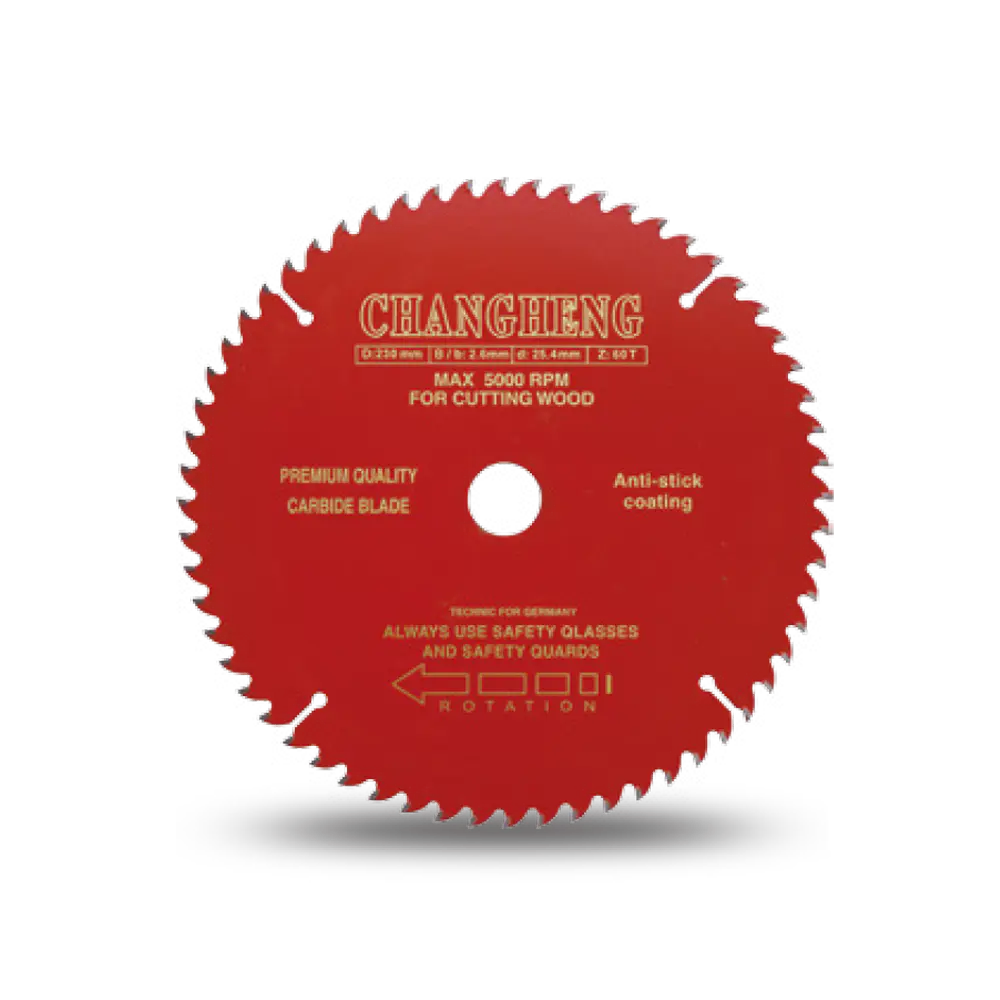
The Term Covers More Ground Than Most Buyers Expect
A skill saw, commonly understood as a handheld circular saw, uses a rotating disc blade to cut through materials in a straight or guided line. The blades themselves vary enormously in diameter, tooth count, tooth geometry, and core material — and those variables are not cosmetic. Each one directly affects how the blade performs against a specific material, how long it lasts, and what kind of finish it leaves behind.
The category includes:
- Carbide-tipped blades (TCT) for wood, metal, and composites
- High-speed steel (HSS) blades for thinner metals
- Abrasive or bonded disc blades for masonry and ferrous metals
- Diamond blades for ceramite and stone
- Multi-material blades designed for mixed-use applications
Understanding which blade type belongs in which context is the foundation of blade selection — and TCT blades occupy a particularly central position across industrial and workshop settings.
What Is a TCT Blade and Why Does It Matter?
Tungsten Carbide Tipping Changes the Performance Profile Entirely
TCT stands for Tungsten Carbide Tipped. The blade body is typically made from hardened steel, while the cutting teeth are tipped with small segments of tungsten carbide — a material considerably harder and more wear-resistant than the steel it is bonded to. That combination is what makes TCT blades suited for extended production use rather than occasional cutting tasks.
Tungsten carbide holds an edge under heat and friction far longer than standard steel. In cutting applications where a blade is spinning at high RPM against dense or abrasive material, that heat resistance is what separates blades that hold their sharpness through a full production run from those that dull within the first hour of use.
Key characteristics that define TCT performance:
- Hard carbide tips that resist dulling under continuous load
- Steel body that absorbs vibration and maintains blade geometry
- Variable tooth geometry to suit different materials and cut qualities
- Longer regrinding cycles compared to non-carbide alternatives
TCT Circular Saw Blades for Wood: Application and Design Logic
How Tooth Geometry Changes When Cutting Wood
Wood is a fibrous material, and the way a saw blade moves through it has to account for that structure. Different wood types — hardwood, softwood, engineered panels, laminate — all behave differently under the blade, and the tooth geometry reflects those differences.
- A TCT Circular Saw Blade for Wood typically features one of the following tooth configurations:
- ATB (Alternate Top Bevel): Teeth alternate between left and right bevel angles, producing a clean scoring action on both faces of the cut. Well-suited for general timber and sheet material work.
- FTG (Flat Top Grind): Teeth are flat across the top, offering aggressive material removal. Common in ripping applications where speed matters more than surface finish.
- Hi-ATB: A steeper bevel than standard ATB, used where a particularly clean finish is needed on veneered panels or laminates.
- Combination: Alternates between flat-top and ATB teeth in groups, balancing ripping speed with crosscutting capability for general-purpose use.
Tooth count also matters. Blades with fewer teeth remove material faster but leave a rougher edge. Higher tooth counts produce a finer finish but cut more slowly. For structural timber framing, a lower tooth count suits the task; for furniture-grade panels, a finer blade is the appropriate choice.
Where Wood-Cutting TCT Blades Are Used
Applications that commonly specify a TCT saw blade for wood include:
- Solid timber framing and structural lumber cutting
- MDF, plywood, and particleboard panel processing
- Laminate flooring and veneer panel cutting
- Furniture manufacturing and cabinet making
- Joinery and window or door frame production
TCT Circular Saw Blades for Metal: A Different Set of Requirements
Why Metal Demands a Different Blade Entirely
Cutting metal with a wood blade — or an abrasive disc where a carbide blade would serve better — is one of the more common mistakes in workshops that handle multiple materials. Metal does not yield the way wood does. It work-hardens under friction, generates significantly more heat, and produces chips rather than dust. All of these properties require a blade engineered specifically for metal behavior.
A TCT Circular Saw Blade for Metal is designed around controlled chip formation and heat dissipation. The tooth count is typically higher than a comparable wood blade, and the tooth geometry is configured to shear through metal rather than split fibers.
Distinctions between metal-cutting and wood-cutting TCT blades:
- Metal blades have a finer tooth pitch to prevent tooth overload from chip jamming
- Gullets (the space between teeth) are shaped to clear metal chips efficiently
- The blade body is often thicker to manage the torsional load of metal cutting
- Expansion slots are included in the design to manage thermal expansion during cutting
Common applications for metal-cutting blades include steel tube and pipe cutting, structural steel profile cutting, and sheet metal fabrication environments.
Aluminium Cutting: A Category With Its Own Specific Demands
Why Aluminium Is Not Simply a "Soft Metal" From a Blade Perspective
Aluminium is softer than steel but presents its own cutting challenges that a standard metal blade does not fully address. The material is ductile, which means it tends to stick to cutting edges rather than shear cleanly away. Without the right blade geometry and appropriate cutting conditions, aluminium builds up on tooth faces — a process called built-up edge — which degrades cut quality and shortens blade life considerably.
A TCT Saw Blade for Aluminium addresses these characteristics through:
- A high tooth count that distributes the cutting load across more points of contact
- Highly polished tooth faces that reduce material adhesion
- Positive hook angles that encourage clean chip ejection
- Wider gullets than metal blades, accommodating the larger chips aluminium produces
Some aluminium cutting applications also benefit from light lubrication at the cut line, particularly in extrusion cutting where long, continuous profiles are being processed. The combination of the right blade geometry and managed cutting conditions produces clean, burr-free results that reduce secondary finishing work.
Where Aluminium-Specific Blades Are Specified
- Aluminium extrusion profile cutting
- Window and door frame aluminium section processing
- Automotive and aerospace component cutting
- Sign-making and fabrication work involving aluminium sheet
- Marine and architectural metalwork
Industrial Circular Saw Blades vs. General-Purpose Blades
Does the Distinction Actually Matter in Practice?
It does, particularly in production environments where a blade is running for extended hours under consistent load. An Industrial Circular Saw Blade is engineered to different standards than a blade designed for occasional workshop use, and those differences show up in ways that affect both output quality and cost per cut.
The characteristics that separate industrial-grade blades from general-purpose alternatives:
- Tighter manufacturing tolerances on tooth height and spacing, resulting in more consistent cut geometry
- Higher-grade carbide formulations that resist micro-chipping under heavy load
- More robust brazing between the carbide tip and the steel body, reducing tip loss under vibration
- Blade body materials selected for fatigue resistance over extended operating cycles
- Anti-vibration features such as laser-cut expansion slots and noise-reduction coatings
For a job site circular saw used intermittently, the performance difference between industrial and general-purpose blades may be marginal. In a production facility running the blade through hundreds of cuts per shift, that same difference translates into meaningful variation in blade life, cut quality consistency, and maintenance frequency.
TCT Chop Saw Blades: A Specific Tool, a Specific Blade
What Makes Chop Saw Blades Different From Standard Circular Blades?
A chop saw — also called a miter saw or cut-off saw — operates on a different cutting action than a hand-held or table circular saw. The blade plunges downward into the material in a controlled arc rather than feeding horizontally through a workpiece. That action places different stress patterns on the blade, particularly at the entry and exit points of the cut.
A TCT Chop Saw Blade is designed with that load pattern in mind:
- Tooth geometry optimized for the entry angle of a plunge cut
- Blade body engineered to handle lateral loading during the downward stroke
- Balance and runout specifications suited to the fixed-mount configuration of chop saws
- Material-specific versions available for wood, metal, and aluminium depending on the application
Using a standard circular saw blade in a chop saw, or vice versa, introduces mismatched performance characteristics that affect both cut quality and blade longevity. Matching the blade type to the tool type is as important as matching it to the material.
Blade Selection Reference: Material, Tooth Count, and Application
Choosing the right blade involves matching three variables simultaneously: the material being cut, the required cut quality, and the machine being used. The following provides a practical reference across common application combinations.
| Material | Blade Type | Tooth Configuration | Typical Application |
|---|---|---|---|
| Softwood / Structural Timber | TCT Circular Saw Blade for Wood | FTG or Combination | Framing, construction, rough cutting |
| Hardwood / Fine Timber | TCT Circular Saw Blade for Wood | ATB or Hi-ATB | Furniture, joinery, cabinetry |
| MDF / Plywood / Laminate | TCT Circular Saw Blade for Wood | Hi-ATB or ATB | Panel processing, furniture manufacturing |
| Mild Steel / Structural Steel | TCT Circular Saw Blade for Metal | Fine TCT or Triple Chip | Fabrication, tube and profile cutting |
| Aluminium Extrusion / Sheet | TCT Saw Blade for Aluminium | High tooth count, polished | Extrusion cutting, sign-making, fabrication |
| Mixed Use (Wood + Composites) | Multi-material TCT | Combination | Site work, general building trades |
| Chop Saw Applications | TCT Chop Saw Blade | Material-specific | Fixed-mount cut-off work across materials |
| Industrial Volume Cutting | Industrial Circular Saw Blade | Application-matched | Production lines, heavy fabrication |
A Practical Framework for Blade Selection
How to Match Blade to Application Without Guesswork
Rather than treating blade selection as a process of elimination, a structured approach identifies the right blade more quickly and with less margin for error. A reliable sequence:
- Identify the material — Wood, metal, aluminium, composite, or mixed? Each material category points immediately to a blade family.
- Determine the cut type — Ripping with the grain, crosscutting, mitring, or plunge cutting? This affects tooth configuration selection.
- Define the finish requirement — Is a rough structural cut acceptable, or does the application require a clean, splinter-free edge? Tooth count follows from this.
- Match blade diameter and bore to the machine — An incompatible fit creates safety and performance issues regardless of blade quality.
- Assess volume and duty cycle — Occasional use or continuous production? This determines whether a general-purpose or industrial-grade specification is warranted.
- Consider material-specific factors — Aluminium cutting may require lubrication. Metal cutting requires chip management. Laminated panels require fine scoring geometry.
Working through these six points before specifying a blade eliminates most selection errors and produces a specification that a supplier can fulfill precisely.
Common Blade Failures and What They Indicate
Reading Blade Wear to Prevent Recurring Problems
A blade that fails prematurely is not always a product quality issue. Sometimes it reflects a mismatch between blade specification and application conditions. Understanding what different failure modes look like helps identify the root cause rather than simply replacing the blade.
- Carbide tip loss (braze failure): Often indicates excessive heat from dull blade or insufficient feed rate. Can also reflect vibration from an unbalanced or worn spindle.
- Tooth chipping: Commonly caused by the wrong blade for the material — a wood blade used on metal, or too coarse a tooth count for the material thickness.
- Gumming or resin buildup: Indicates a wood-cutting blade running too slowly through resinous timber. Cleaning and adjusted feed rate typically resolve this.
- Aluminum built-up edge: A tooth-face adhesion issue common in aluminium cutting without adequate lubrication or with incorrect hook angle. Switching to an aluminium-specific blade addresses the underlying cause.
- Body cracking or warping: Suggests the blade is being run above its rated speed, or that heat management features are insufficient for the application's thermal load.
Each failure pattern points back to a specific correction — either in blade specification, machine setup, or operating practice.
Sourcing Considerations for Industrial Blade Procurement
What to Evaluate When Assessing a TCT Saw Blade Manufacturer
For procurement teams sourcing blades at volume, the product specification is one part of the evaluation. Consistency across batches, tolerance control, and supplier reliability over time matter equally in production contexts where blade performance variation directly affects output quality.
Key questions for evaluating TCT Saw Blade Manufacturers:
- What carbide grades are used, and are they consistent across production runs?
- What are the tolerance specifications for tooth height, spacing, and runout?
- Does the supplier offer material-specific blade variants, or only general-purpose configurations?
- What quality control documentation is available for incoming inspection?
- Can the supplier support custom specifications for non-standard applications?
- What are the lead times and minimum order quantities for industrial volumes?
- A supplier who can answer these questions with documented specifics rather than general assurances is operating at a level that supports serious production procurement.
Matching the right blade to the right material and machine is not a detail — it is the foundation of cutting efficiency, tool life, and output quality across any workshop or production setting. The range of skill saw blade types is wide enough that the selection question always has a specific answer, and that answer changes significantly depending on whether the material is wood, structural steel, aluminium extrusion, or something in between. Zhejiang Changheng Tools Co., Ltd. manufactures a range of TCT circular saw blades covering wood, metal, aluminium, and industrial applications, with product configurations suited to both general workshop use and high-volume production requirements. For procurement teams or workshop managers looking to match blade specification to application with precision, reaching out to their technical team for product recommendations or sample evaluation is a practical starting point.
keep in touch
-
We are committed to providing durable, reliable, and efficient cutting solutions for global B2B clients and partners.
-
Useful Links
Home Products About Us Manufacturing Custom Service News Contact Us -
Contact Us
+86-579-89270208
+86-579-89270636ch001@changhengsaws.comNo. 102, Huacheng East Road, Chengxi Industrial Zone, Yongkang, Zhejiang, China -
Mobile Web
