


 Industry News
Types of TCT Circular Saw Blade for Wood: Selection Guide
One Source for Every Cutting Blade Need
Choosing the wrong circular saw blade for a woodworking application is one of those mistakes that announces itself immediately — through rough surfaces that need sanding, burned edges on hardwood, tearout on veneered panels, or a blade that simply dulls faster than it should for the volume of cutting involved. The selection decision looks simple until it isn't. A TCT Circular Saw Blade for Wood that performs well on solid softwood in a framing context will produce a different result on laminated panels or dense hardwood, and understanding why requires knowing more than just the blade diameter. The differences between blade types for wood cutting go deeper than tooth count or price — they involve the geometry of the teeth, the material of the cutting tips, the blade body design, and how each of those variables interacts with the specific cutting task.
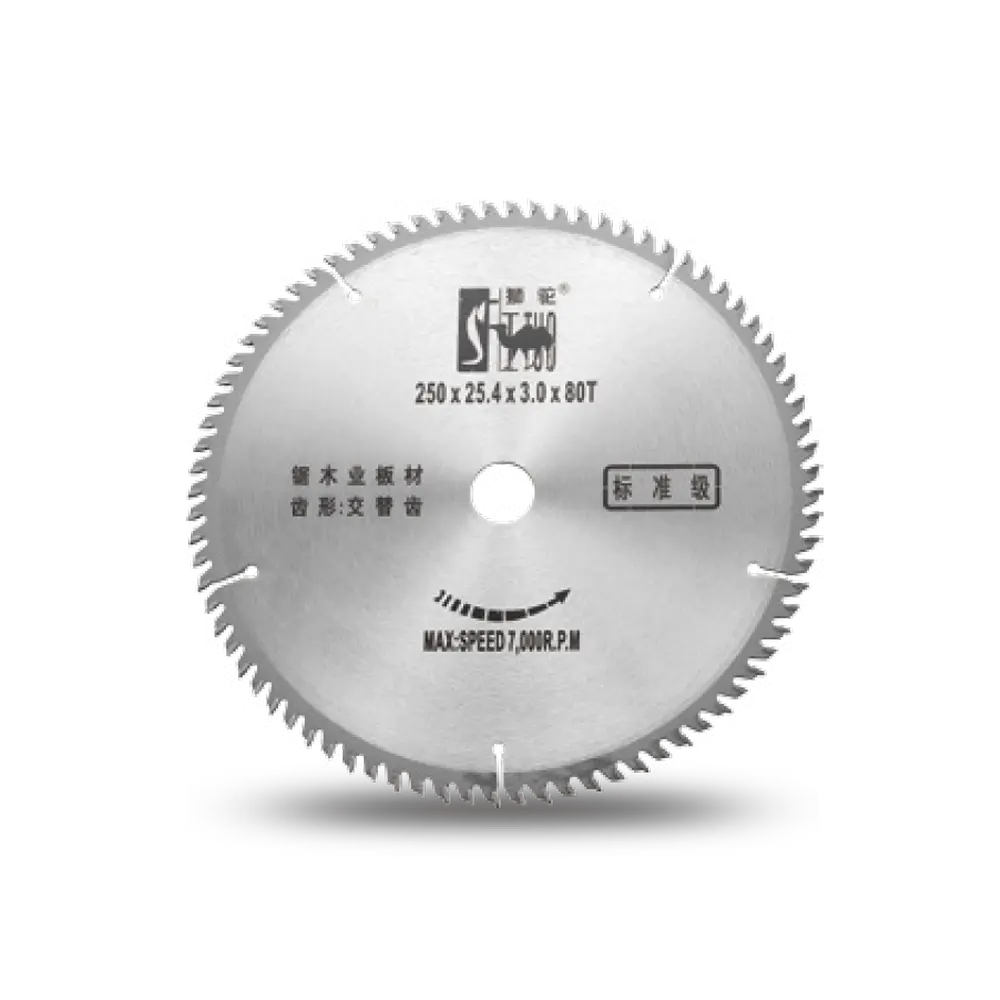
What Makes a Circular Saw Blade Suitable for Wood?
The Cutting Edge Material Is Where the Comparison Starts
Not all circular saw blades for wood are built the same way. The most important structural distinction in modern woodworking blades is between high-speed steel blades and carbide-tipped blades — and for most professional and industrial wood cutting applications, the carbide-tipped category has become the working standard.
A tungsten carbide tipped circular saw blade has a steel body with individual cutting tips brazed onto each tooth. Those tips are made from a sintered compound of tungsten carbide and cobalt — a material substantially harder than steel and capable of maintaining a sharp cutting edge through far more material than a steel tooth. The combination of a flexible, vibration-damping steel body with wear-resistant carbide cutting tips produces a blade that handles the demands of production woodworking more reliably than alternatives.
Why carbide-tipped blades dominate wood cutting:
- Edge retention — carbide maintains sharpness through much longer cutting runs, reducing downtime for blade changes in production environments
- Cutting quality — sharper edges produce cleaner surfaces, reducing or eliminating the secondary operations needed to achieve the required finish
- Material versatility — carbide handles a range of wood types, from softwood to dense hardwood and composite materials, without the performance variability that steel blades show across different wood densities
- Resharpenability — carbide tips can be reground multiple times before the blade is retired, which affects total cost of ownership in high-volume operations
The grade and formulation of the carbide, the brazing quality, and the geometry of the tip all vary between manufacturers and between blade lines within the same manufacturer's range. These variables are what separate blades that carry the same basic description but perform differently in practice.
The Role of Tooth Count in Wood Cutting Performance
Does Higher Tooth Count Always Mean Better Results?
Tooth count is one of the more commonly discussed blade specifications, and it is also one of the most frequently misapplied. The relationship between tooth count and cutting performance depends on what "performance" means for the specific task — and for wood cutting, speed and surface quality pull in different directions.
Low tooth count blades remove material quickly. Fewer teeth means larger gullets (the space between teeth) that clear chips efficiently, allowing the blade to move through wood without packing chips into the cut zone. These blades are suited to ripping along the grain in solid lumber, where throughput matters more than surface finish.
High tooth count blades prioritize surface quality over removal rate. More teeth means smaller chip loads per tooth and finer cuts, but also less gullet space — so they are not suited to aggressive stock removal. They are suited to crosscutting, panel cutting, and finish cuts where the surface left by the blade is close to the final surface of the finished product.
A mid-range tooth count sits between these poles — capable of both ripping and crosscutting at acceptable quality, which is why blades in this range are common general-purpose choices for operations that do not want to change blades constantly between tasks.
The practical implication for buyers: matching tooth count to the dominant cutting task avoids the compromise of a general-purpose blade when the application actually benefits from a specialized one.
Main Types of Circular Saw Blades for Wood Applications
What Are the Distinct Blade Categories That Wood Processors Actually Use?
Wood cutting applications are diverse enough that no single blade design serves all of them well. The categories below represent the main design types used across different woodworking contexts.
Rip blades
Rip blades are designed for cutting along the wood grain. They use a flat-top grind on the carbide tips, with deep gullets between teeth to clear the heavy chip volume generated by ripping. The cutting action is aggressive and efficient in straight-grain cuts but produces a rougher surface than crosscut blades. They are suited to dimension lumber, log processing, and solid wood preparation.
Crosscut blades
Crosscut blades cut across the grain. The teeth use an alternate top bevel (ATB) grind — alternating left and right bevels on successive teeth — which produces a slicing action that severs wood fibers cleanly rather than pushing through them. The result is a smoother surface with less tearout on the exit side of the cut. Crosscut blades are used for trim work, cabinetmaking, and panel cutting where surface quality matters.
Combination blades
Combination blades incorporate both rip and crosscut tooth groups in alternating sequences — typically a group of raker teeth followed by a group of ATB teeth. This design allows the blade to handle both cutting directions without a blade change. The tradeoff is that it does not perform as cleanly as a dedicated crosscut blade for finish work, nor as efficiently as a rip blade for heavy ripping. For job sites or small shops where versatility outweighs specialization, it is a practical choice.
Fine woodworking blades
A saw blade for fine woodworking is optimized for cut quality above all else. High tooth counts, precision-ground ATB or triple-chip-grind (TCG) profiles, and tighter manufacturing tolerances combine to produce cuts that require no further work on the surface. These blades are used in cabinetry, furniture production, and instrument making — anywhere that the cut surface is visible in the finished product. They typically cut more slowly and are less suitable for high-volume rough cutting.
Thin-kerf blades
Thin-kerf designs reduce the width of material removed in each cut. This matters in settings where material cost is significant or where the saw does not have the power to drive a full-kerf blade at production speed. Thin-kerf industrial circular saw blades require stable feed control and a properly tuned saw to avoid blade deflection.
Panel and sheet goods blades
Plywood, MDF, particleboard, and laminated panels cut differently from solid wood. The adhesives in plywood and the resin content of MDF blunt carbide faster than clean solid wood, and the surface of laminated panels chips easily if the blade tooth geometry is not matched to the material. Dedicated panel blades use tooth geometries and carbide grades suited to these materials.
TCT Blade Structure: What Sets Industrial-Grade Blades Apart
How Does the Construction of a Tungsten Carbide Tipped Blade Affect Its Performance?
The phrase "tungsten carbide tipped" describes a category rather than a specific product — the performance range within that category is wide. Understanding what differentiates a blade built for production environments from a basic carbide-tipped option helps buyers evaluate specifications more accurately.
Carbide grade
Carbide tip material is described by its composition — typically the ratio of tungsten carbide to cobalt binder and the grain size of the tungsten carbide particles. Finer grain sizes and optimized cobalt ratios produce tips that are harder (resisting wear longer) while maintaining enough toughness to handle the impact loads of cutting. A blade intended for abrasive materials like MDF uses a different carbide grade than one intended for clean hardwood.
Tip geometry (grind type)
The shape of the cutting edge — ATB, flat-top, TCG, high-ATB — determines how the tip engages the wood. Different geometries suit different cutting directions and material types. Flat-top grinds are aggressive rippers. ATB grinds produce clean crosscuts. TCG grinds handle abrasive materials and non-ferrous materials with alternating flat and chamfered teeth. Getting the grind type right for the application affects surface quality, blade life, and motor load.
Blade body design
The steel body of a circular saw blade is not simply a carrier for the carbide tips. Its design affects vibration, noise, heat dissipation, and stability during cutting:
- Expansion slots cut into the blade body allow it to expand as it heats during use, preventing warping
- Laser-cut anti-vibration slots reduce noise and improve cut smoothness
- Body thickness affects lateral stability — thicker bodies are stiffer under side loads, which matters in precision panel cutting
Brazing quality
The carbide tips are attached to the blade body through a brazing process. Brazing quality determines whether tips remain securely bonded through the thermal and mechanical cycles of production use. A blade with poorly brazed tips may lose teeth during use — which is both a quality problem and a safety hazard.
Matching Blade Type to Application: A Structured Overview
Different woodworking operations call for different blade designs. The overview below connects common wood cutting applications to the blade characteristics that suit them.
| Application | Blade Type | Key Characteristic | Grind |
|---|---|---|---|
| Ripping solid lumber | Rip blade | Low tooth count, deep gullets | Flat-top grind |
| Crosscutting solid wood | Crosscut blade | High tooth count, smooth finish | ATB grind |
| General shop use | Combination blade | Mid tooth count, versatile | ATB + raker groups |
| Cabinet and furniture finish cuts | Fine woodworking blade | High tooth count, precision ground | High-ATB |
| Plywood and panel cutting | Panel blade | Chip-limiting geometry, hard carbide | ATB or TCG |
| MDF and particleboard | Sheet goods blade | Abrasion-resistant carbide grade | TCG |
| Laminate flooring | Laminate blade | Very high tooth count, score and cut geometry | TCG or high-ATB |
| Industrial production ripping | Industrial circular saw blade | Heavy-duty body, long-run carbide | Flat-top grind |
Fine Woodworking vs Industrial Production: Different Demands on the Same Blade Category
Why Does the Same Blade Type Perform Differently Across Different Production Environments?
The label "TCT saw blade for wood" covers applications that differ substantially in what they demand from the blade. A furniture workshop producing custom pieces places different loads on a blade than a panel processing line running the same blade at continuous production speed.
In fine woodworking, the blade is typically operating at lower feed rates with more careful stock preparation. The priority is surface quality, and the blade is expected to produce results that require minimal finishing. Blades in this context are often changed more frequently — before quality degradation is visible — because even a slightly dulled edge produces surfaces below the acceptable standard for fine work.
In industrial production, throughput is the governing variable. Blades run longer between changes, and the acceptable surface finish is defined by what the subsequent process can accommodate rather than by a hand-sanding standard. Industrial circular saw blades in these environments are selected for edge retention and consistency across long cutting runs, and they are managed as a consumable with defined replacement intervals based on blade life data.
The two contexts are not served by the same blade specification, even when the raw material being cut is similar. Buyers supplying furniture makers and buyers supplying panel processing lines need different product lines — and suppliers who understand this difference provide more useful guidance than those who treat "circular saw blade for wood" as a single undifferentiated category.
Evaluating TCT Saw Blade Manufacturers and Distributors
What Should Procurement Teams Look for When Sourcing Circular Saw Blades?
The blade manufacturing landscape includes a wide range of suppliers — from specialized industrial blade producers to broad-line cutting tool distributors. Evaluating them on the right criteria helps procurement teams find sources that reliably support their production requirements.
Key factors in supplier evaluation:
- Carbide sourcing and grade documentation — reputable manufacturers can specify the carbide grade used in each blade line and explain how it was selected for the application
- Brazing quality and tip retention testing — ask whether the manufacturer tests brazing bond strength, and what the process looks like
- Tooth geometry consistency — precision-ground blades with consistent tip geometry produce more consistent cut quality than blades with variation between teeth
- Product range depth — suppliers who offer blades across the full range of woodworking applications — rip, crosscut, panel, fine woodworking, industrial — can support buyers whose needs change with the project or product mix
- Resharpening support — whether the manufacturer offers resharpening service or can supply resharpening specifications affects the total cost of ownership of their blades in production settings
- Custom specification capability — some production environments require non-standard blade diameters, bore sizes, or tooth configurations; manufacturers with custom production capability accommodate these requirements without excessive lead time
A saw blade distributor that sources from multiple manufacturers adds a layer of flexibility — buyers can access different blade lines for different applications through a single purchasing relationship. The tradeoff is that the distributor's technical knowledge needs to be sufficient to guide specification, which is not always the case.
Selecting Blades That Match the Work, Not Just the Machine
Blade selection for wood cutting is ultimately about matching a specific cutting tool to the specific conditions it will operate in — material type, feed rate, cut direction, surface quality requirement, and production volume all affect what the blade needs to do. The range of available blade designs, carbide grades, and tooth geometries exists because the range of wood cutting applications is genuinely diverse. Using a blade designed for one context in another produces results that are worse than what a correctly specified blade would deliver, and the difference shows up in surface quality, blade life, and secondary processing costs.
For procurement teams managing blade supply for wood processing operations, working with suppliers who can articulate why a specific blade specification suits the intended application — rather than simply offering a catalog listing — produces better sourcing outcomes. Zhejiang Changheng Tools Co., Ltd. manufactures TCT circular saw blades across a range of woodworking applications, including fine woodworking, panel processing, and industrial ripping, with product lines suited to both standard and custom specification requirements. Reaching out to discuss your specific cutting application, production volume, and quality requirements is a practical starting point for identifying the blade specifications that will work well in your operation.
keep in touch
-
We are committed to providing durable, reliable, and efficient cutting solutions for global B2B clients and partners.
-
Useful Links
Home Products About Us Manufacturing Custom Service News Contact Us -
Contact Us
+86-579-89270208
+86-579-89270636ch001@changhengsaws.comNo. 102, Huacheng East Road, Chengxi Industrial Zone, Yongkang, Zhejiang, China -
Mobile Web
